'Toshy'
Toshiba Satellite C660
Current Status: Still chuggin'
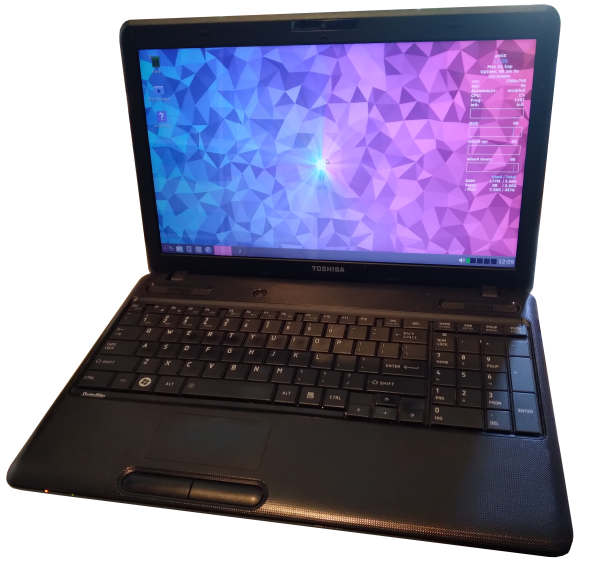
CPU: Pentium Dual-Core T4500 2.3Ghz
RAM: 6GB DDR3 (can take 8GB)
Storage: 500GB HDD (original)
Optical: DVD-RW
Current OS: antiX 26 runit + IceWM
Personal History
I was gifted this in 2010-2011 for a birthday I think, and it was my main computer from that time until about 2016. It came with Windows 7 32-bit, and at some point I put another stick of RAM in there. This is the first computer I installed GNU/Linux on in 2024, trying out 32-bit versions of Linux Mint Debian Edition, MX Linux, and settling on antiX.
I have since discovered this actually has a 64-bit CPU, it just defaulted to 32-bit Windows 7 from the manufacturer and I never looked it up until a few months after using it again. Further to this, I installed 64-bit antiX, and it turns out I had 6GB of RAM in this thing. When I updated the RAM ten or so years ago I didn't know that 32-bit only supports 3GB, and never thought to physically double check. I've learned some simple lessons here.
Likes/Dislikes
There's a few things about this laptop that I still really like. The screen is nice and clear with great colour and it doesn't do that LCD thing where you have to view it from the perfect angle. The keyboard is fantastic with large low-travel keys (much reduced typing strain) that are well placed and have very ledgible font with a full numpad. This thing is so easy to get into and repair, there's a one screw panel on the underside that reveals easy access to the RAM and hard drive bay, and the battery is also externally removable. So much easier than any of the more modern laptops I have had to fix. It also feels very solid and durable, some newer laptops I pick up (including my Asus Vivobook) feel like something could snap if I hold it wrong, not the case with this thing. The only drawbacks of this laptop are: it's old, so I'm not sure how much longer it will run or how long parts will be easily available anymore, and it's relatively low powered, struggling to run modern bloated websites, so I just don't use it for that.
Usage
- I am starting to use it more for blogging/website stuff because it is so comfortable to type with and appropriately low powered.
- Thinking about using it to test lightweight distros on genuinely old hardware, as I can easily swap out hard drives if needed.
Troubleshooting/Repairs
- Only problem I ever had was very recent; after a fresh install of antiX 23.1, post grub screen it would sit with a flashing cursor loading for 10+ minutes before actually booting in. The problem was an 'unstable clocksource'
The solution that worked for me was adding 'tsc=unstable' to the grub boot command in '/etc/default/grub'. So it should read: GRUB_CMDLINE_LINUX_DEFAULT="quiet selinux=0 tsc=unstable". I don't think I had to do this for the antiX 26 install though.
Resources
- Here's a cnet.com review from 2011
- Ifixit repair guides (very easy)
- Long boot time in antix 23.1 [solved] - antiX forum post; the solution to my unstable clocksource.
- Takes Ages to Load OS from HD. [SOLVED] - antiX forum post; referenced in the other forum post, has some further info.
- UserBenchmark.com Toshiba Satellite C660 Compatible Components List - might be useful, probably better to just use a search engine and find local sellers/websites though.